
Reel Review: 28 Years Later: The Bone Temple Answers Lingering Questions From The Franchise’s Last Installment
In a world where a television series can take up to years for a new season, the 28 Days Later franchise set a new standard for the industry turning around a sequel just a short six months after it’s last installment. Much like Wicked, the franchise filmed all of the 28 Years Later films in succession, allowing them to rollout the films in a faster manner. One of my largest gripes with 28 Days Later is that it felt largely incomplete. A lot of new characters and storylines were introduced without much resolution. After seeing the newest film, it’s clear they were setting up for the story to continue in a larger world.
28 Years Later’s running theme was familial love and how far you are willing to go to save the people closest to you. This idea was explored through Aaron Taylor-Johnson’s approach to fatherhood, as well as his relationship with his wife. What entails in that films is extremely heartbreaking but boils down to the idea of letting people go when it’s time. At the end of the film, Spike decides to stay on the mainland and inherently joins an odd cult where everyone is named Jimmy. The ending, at the time, felt very off-tone. Now seeing the newest film, most of my questions have been answered.
28 Years Later: The Bone Temple explores the theme of faith and religion during perilous times. Some people seek out a higher power to make sense of their circumstances, while others turn to science and facts in hopes of a cure. While both of these approaches are valid responses to pain and grief, the extent to which is taken is what is being questioned.
Ian’s budding friendship with Samson proves that there is still good in a world where evil seems to run rampant. There is still a level of empathy left in people who have endured such traumatizing things. Ian insist upon using his short time left on earth to research the virus and discover how it is affecting the people who become infected. His belief in a potential cure pushes forward this notion of hope and empathy for audiences, even when no one else in that world is aware of his research.
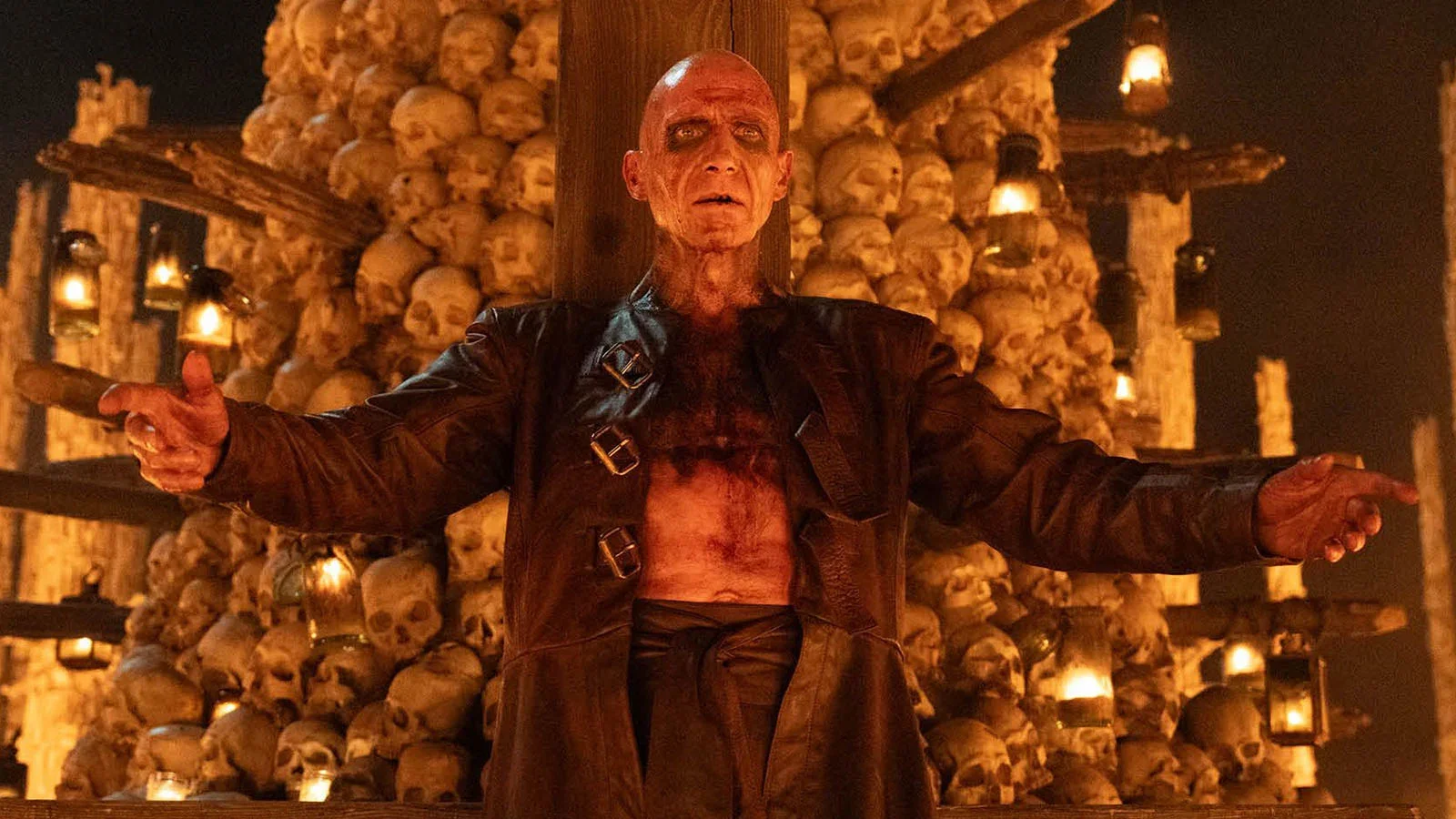
Sir Lord Jimmy Crystal takes his faith to an extreme, creating a cult to cope with the state of the world. In believing that he has been chosen to carry out such heinous acts, he feels valuable. This feeling of power and control allows him to go through daily life in such turbulent times. As horrible as his actions may be, he truly believes he has a sense of purpose, and that extends to his followers. In such desperate times, any feeling of community or purpose is latched onto, no matter what it takes to hold onto it.
28 Years Later: The Bone Temple is an absolutely brutal display of the human condition and how far people are willing to go not only to survive, but feel a sense of purpose and belonging. While 28 Years Later felt like a lot of set up, 28 Years Later: The Bone Temple is where it starts to pay off, allowing deeper exploration of characters and themes in this viscous yet alluring world.
While 28 Years Later: The Bone Temple answered many of my lingering questions, there are still many left. Is there a cure to the virus that caused this whole outbreak? Is Samson cured indefinitely? What happened to Cathy and her baby? Will Jim save Spike and Kelly, taking them in? All of this and more is sure to come to fruition in the final installment of the 28 Years Later trilogy.
28 Years Later: The Bone Temple is playing in theaters now.
